Product Description
Solid Double Hollow Block
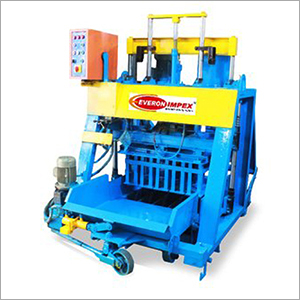
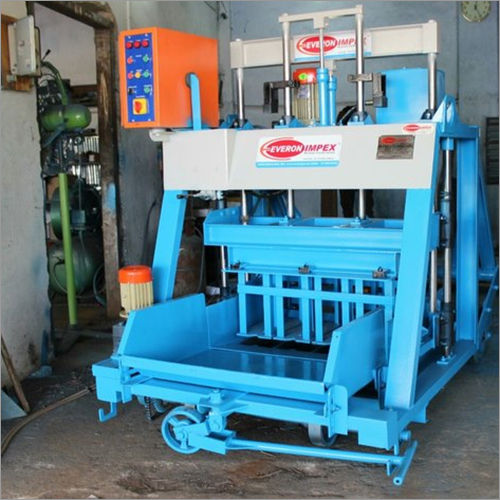
Solid Double Hollow Block is a high performance fully automated machining unit which is commonly used for the production of high quality and dimensionally accurate concrete blocks that can be used in the construction of small to large sized residential, commercial and industrial buildings. It is equipped with a series of hydraulic units to generate high compressive forces compress the concrete mixture inside the dies. The machine runs with the help of high speed electrical motor which transfers the mechanical force to the working mechanism.
Specification
| Minimum Order Quantity | 1 Unit |
| Provide After Sales Service | Yes |
| Automation Grade | Semi-Automatic |
| Condition | New |
| Capacity | 500-1000 |
| Block Type | Solid |
| Method | Hydraulic Pressure |
| Warranty | 1 Year |
| Is It Hydraulic | Hydraulic |
Designed to deliver 4 blocks per stroke with each cycle taking just 2530 seconds, this machine enables rapid and consistent outputyielding up to 1,000 blocks per hour. Its hydraulic pressure operation guarantees precise molding, helping manufacturers meet large project requirements with ease.
Robust and Low-Maintenance ConstructionCrafted from premium mild steel with a paint-coated surface, the machine withstands demanding industrial environments. The low-maintenance design, coupled with reliable air cooling and a 200-litre oil tank, ensures prolonged, efficient functioning with minimal service interruptions.
Versatility in ApplicationSuitable for both indoor and outdoor operation, the block making machine is tailored for construction and building material producers. With adaptability for various working conditions, its ideal for manufacturers seeking semi-automatic, manual, or relay-controlled processes.
FAQs of Solid Double Hollow Block Making Machine:
Q: How does the Solid Double Hollow Block Making Machine operate?
A: This block making machine employs a hydraulic pressure method to shape blocks. Loaded with raw materials, the mold produces four blocks per cycle. With semi-automatic operation and manual or relay controls, the operator can oversee the process efficiently, ensuring consistent block quality with minimal effort.
Q: What are the benefits of using this machine for block manufacturing?
A: Key benefits include high production capacity (8001000 blocks per hour), low noise, and reduced maintenance needs. Its robust construction ensures durability, while ease of operation and rapid cycle times help boost productivity and reduce operational costs for manufacturers.
Q: When is the ideal time to use this machine on a worksite?
A: The machine can be deployed anytime block or brick production is required during a construction project. Its indoor/outdoor adaptability allows it to be used during various project phases, supplying blocks as needed for speedy and continuous construction progress.
Q: Where can this block making machine be effectively utilized?
A: This equipment is ideal for construction sites, brick manufacturing facilities, and building material production plants. Its design allows for both indoor and outdoor use, catering to diverse operational requirements in India and for export.
Q: What is the process for setting up and running the block machine?
A: Begin by placing the machine on a stable surface and connecting it to a 440 V power supply. Load the raw material onto the pallet, adjust controls as per the manual/relay system, and initiate the cycle. The blocks are then formed under hydraulic pressure and lifted at a speed of 12 m/min for collection.
Q: How does the machine ensure low maintenance and reliable operation?
A: The solid mild steel frame, air-cooling system, and a large-capacity oil tank (200L) reduce wear and prolong component life. The simple semi-automatic design minimizes technical complications, enabling straightforward upkeep.
Q: What types of materials can this machine process and what is its general use?
A: Primarily, the machine is designed for use with standard brick and block-making raw materialssuch as concrete and fly ash. Its main use is manufacturing solid double hollow blocks for construction and infrastructure projects.







 Send Inquiry

